
How to Protect a New Car in Summerville and Keep It Clean Yourself
What to do in the first 30 days, which protection is worth paying for, and a driveway routine that keeps the paint and interior looking new without a detailer every month.
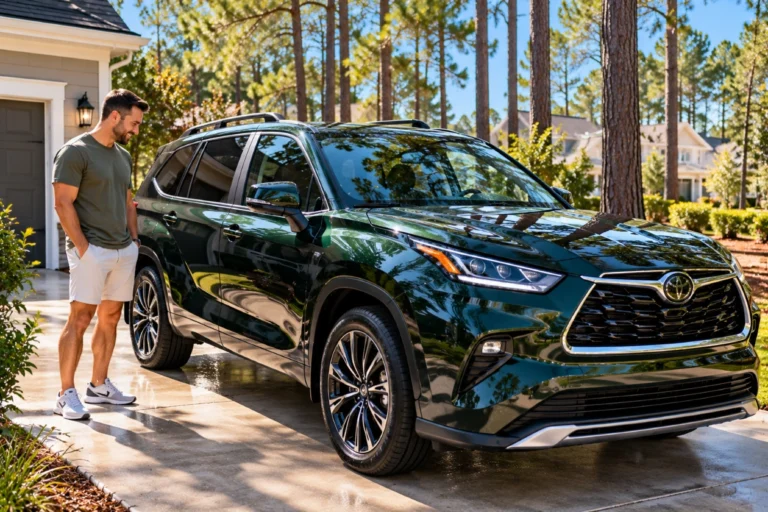
Protect a new car in its first month, before pollen, lovebugs and sun get to it. Wash it by hand, skip brush tunnels, and put a sealant or ceramic coating on the paint. After that, a two bucket wash every two to three weeks and a sunshade in summer do most of the work.
What Should You Do in the First 30 Days?
New paint is the easiest paint to protect. A little effort now saves polishing later.
Day one
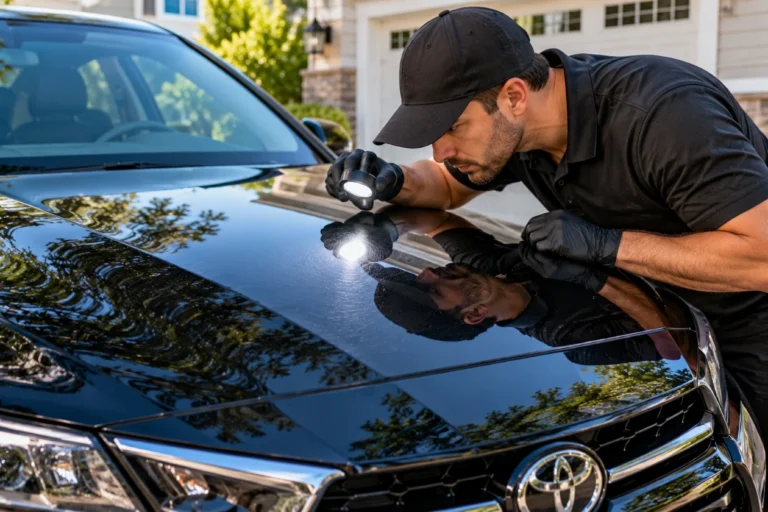
Look the paint over in direct sun before you leave the lot. Dealer washes often leave light swirls, and it’s easier to raise it now.
Week one
Give it a gentle hand wash. No brush tunnels, no dish soap, no drying with a bath towel.
Week two
Choose your protection. Wax, sealant, ceramic coating or film. The table below helps.
By day 30
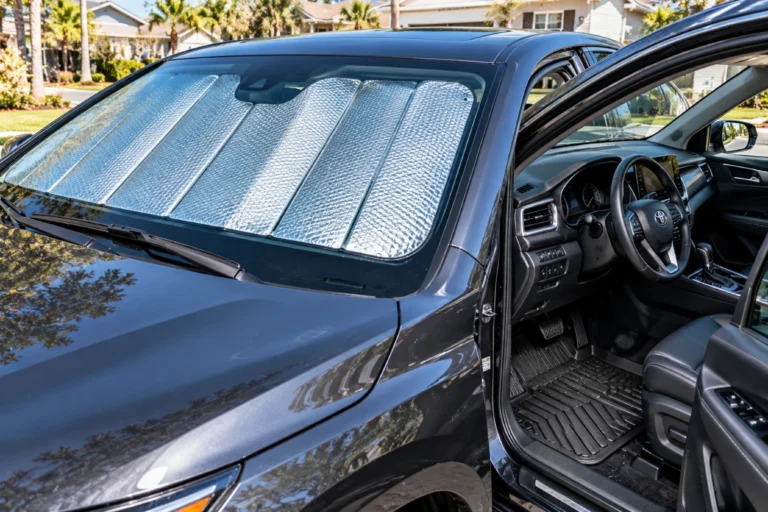
Protection on the paint, rubber mats on the floor and a sunshade in the door pocket.
Which Paint Protection Should a New Car Get?
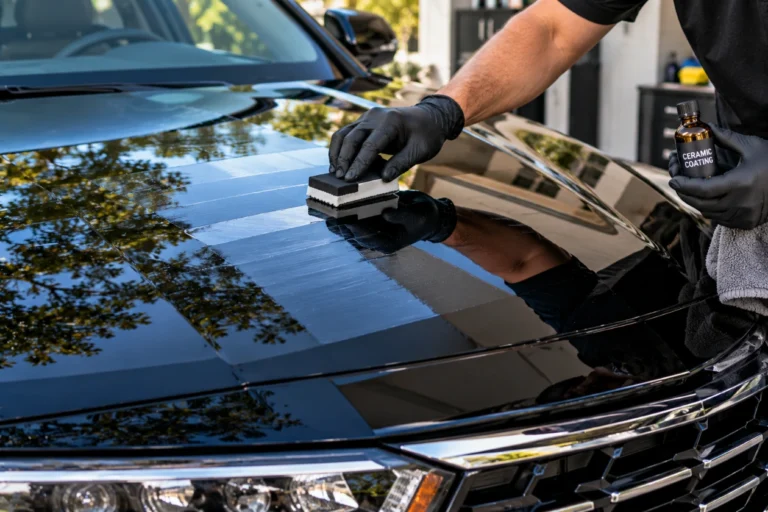
The right paint protection for a new car depends on how long you’ll keep it and where it parks. For a car you’ll keep three years or more, parked outside under Summerville pines, a ceramic coating is worth a look. For a short lease or a garage kept car, a sealant a few times a year does the job for less.
| Option | How long it lasts here | Pick it if |
|---|---|---|
| Wax | About 4 to 6 weeks in our heat | You enjoy doing it yourself every month |
| Paint sealant | A few months | You want solid protection at low cost |
| Ceramic coating | 2 to 5 years | You’ll keep the car for years and it lives outside |
| Paint protection film | Many years | You drive Interstate 26 daily and hate rock chips |
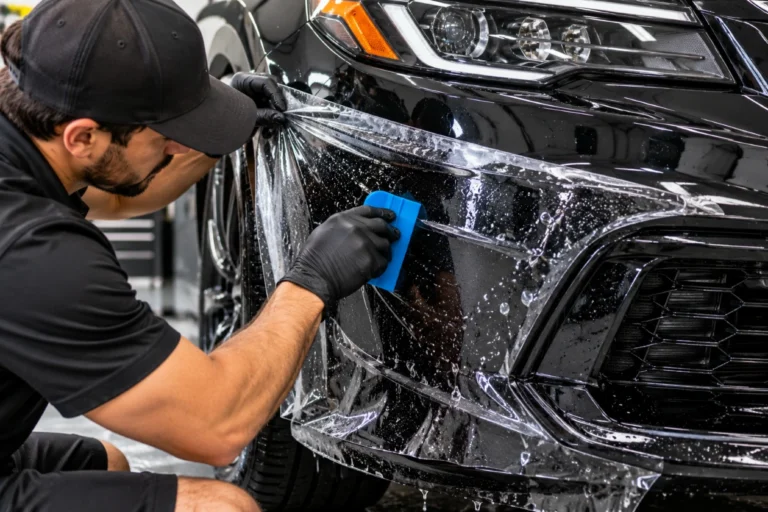
A coating and film do different jobs. A coating makes pollen, sap and bugs easier to wash off and adds gloss. It won’t stop rock chips. Film stops chips on the front end. Some owners use both. Our paint correction and ceramic coating page covers the limits of each.
Should You Buy the Dealer’s Paint Protection Package?
Before you buy a dealer’s paint protection package, ask three questions. What product is it, who applies it and how long does it last on paper? Some dealer packages are a sealant applied in a few minutes with a warranty attached. That’s not worthless, but compare it with what a detailer would charge for a real coating with proper paint prep.
Does a Brand New Car Need Paint Correction?
A brand new car sometimes needs a light paint correction. New cars sit on lots, get washed by lot crews and ride on trucks, so fine swirls are common, mostly on dark colors. Check the hood and doors in direct sun. If you see fine circles, a single light polish before any coating will remove them.
A DIY Upkeep Schedule for Summerville
This is the same rhythm we suggest to customers between visits.
| How often | What to do | Why it matters here |
|---|---|---|
| Weekly in pollen season | Rinse the car with plain water | Pollen from late March through April turns sticky once dew hits it |
| Within a day or so | Wash off lovebugs and bird droppings | Clemson Extension warns lovebug remains are acidic |
| Every 2 to 3 weeks | Two bucket hand wash and dry | Road film from daily commutes builds up fast |
| Monthly | Vacuum, wipe the dash with UV protectant, clean the glass | July highs average 91°F, and sun cracks dashboards |
| Every 3 to 4 months | Reapply sealant, shampoo mats | Sealant fades faster in our heat and humidity |
| Once a year | Clay the paint, swap the cabin air filter | Pollen clogs filters and bonds to paint |
A Driveway Wash That Won’t Scratch
About 30 minutes once you have the routine down. Wash in the morning or in shade.
Rinse first
Hose off loose dirt and pollen from the top down. Never wipe a dry, dusty panel.
Wheels before paint
Use a separate brush and bucket for wheels so brake dust never reaches the mitt.
Two buckets, top down
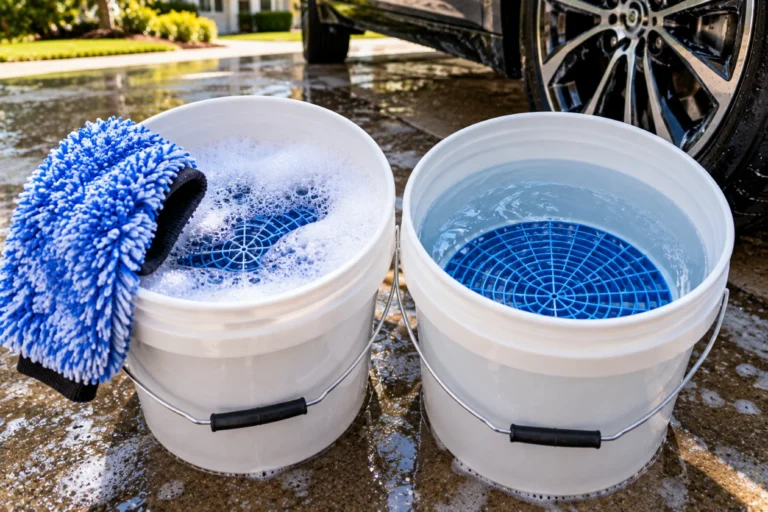
Soap in one bucket, rinse water in the other. Rinse the mitt after every panel.
Dry by hand
Use a clean microfiber drying towel. Town water is soft, but it still leaves mineral spots if it dries in the sun.
Top up protection
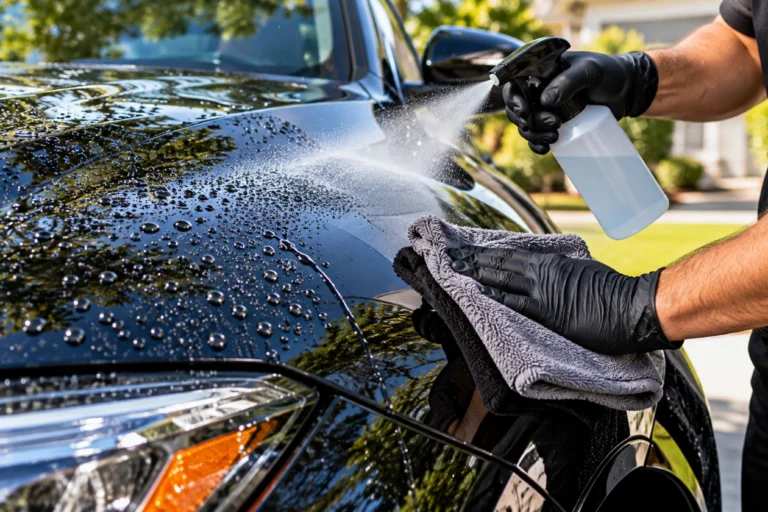
Mist on a spray sealant while the paint is clean. It takes five minutes.
What to Buy and What to Skip
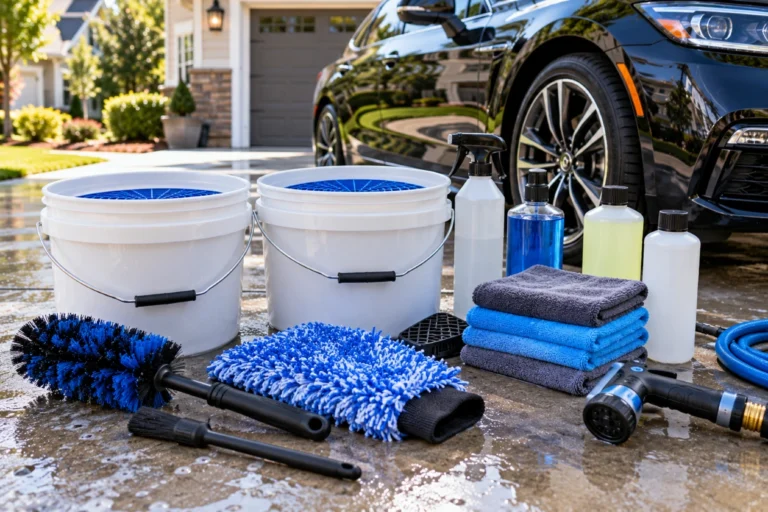
You don’t need a garage full of products. This short list covers nearly everything.
- Two buckets with grit guards
- pH balanced car soap
- A microfiber wash mitt
- A large microfiber drying towel
- A wheel brush that stays with the wheels
- Spray sealant
- Interior protectant with UV blockers
- Ammonia free glass cleaner, which is safe on tint
- Rubber floor mats
- A folding windshield shade
Seven Habits That Age a New Car Fast
Skip These
- Dish soap, which strips wax and sealant
- Washing in full sun at midday
- One bucket and an old sponge
- Drying with a bath towel
- Wiping pollen off dry
- Brush tunnels on dark paint
- Leaving bugs on for the weekend
Do These
- Car soap made for paint
- Morning or shade washes
- Two buckets and a clean mitt
- A microfiber drying towel
- A water rinse before any wiping
- Hand or touchless washes only
- A quick bug wash within a day or so
When Is DIY Not Enough?
DIY isn’t enough when the problem is in the paint or under the carpet. Swirl marks, etched water spots and oxidation need machine polishing. Stains in seat foam and musty smells need hot water extraction. A coating needs careful prep to bond. For those, a detailer saves you time and a costly mistake.
One more thing about washing at home. Soapy water that runs down the driveway goes into the storm drain, and Dorchester County’s stormwater program says runoff isn’t treated before it reaches local creeks. Washing on grass, or using a rinseless wash, keeps soap out of the drain.
Rather Have It Protected Once and Done?
We prep and coat new cars at homes across Summerville, and we’ll tell you honestly if a sealant is all you need. Send a photo for a price.
Auto Detailing Summerville
Mobile car wash and auto detailing in Summerville, SC. We come to your driveway with our own water and power, and you pay after the work.